

By Dr. Jens Thraenhart | CEO, Chameleon Strategies; Founder, Saudi Outbound; Global Tourism Strategist
Chameleon Strategies | UN Tourism Affiliate Member
OPINION | BALANCED TOURISM | GEOPOLITICAL STRATEGY

The travel and tourism industry has a structural bias toward optimism. Planning cycles are set a year in advance. Capacity is committed months before a schedule goes live. Hotel contracts run on multi-year assumptions. That operational rhythm demands confidence, and it tends to filter out information that complicates the narrative.
The problem is that the past five years have produced a compounding series of complications. A pandemic that halted global travel for the better part of two years. A land war in Europe that closed a primary intercontinental routing corridor and has not resolved. An escalating conflict in the Middle East that has already disrupted airspace on some of the world’s most trafficked routes. A climate crisis generating wildfire seasons, extreme heat events, and flooding at destinations that had no adequate contingency for any of them. And an AI-driven transformation of how travelers research, book, cancel, and share experiences, changing the demand signal in ways that traditional forecasting models are not built to read.
These are not separate problems that take turns. They are concurrent. And they share a common root. Each one exposes a concentrated dependency that the industry built during its growth years and never adequately stress-tested: routing networks concentrated through a handful of Gulf hubs, development models concentrated in a few high-volume coastal and urban destinations, demand forecasting concentrated on a narrow set of established source markets, and planning cycles concentrated in timeframes too short for structural risk to register.
Balanced Tourism, as a planning philosophy, begins from a different premise: that the health of the tourism sector over any meaningful time horizon depends not on maximizing concentration in whatever is working today, but on distributing exposure across source markets, routing corridors, seasons, channels, and governance relationships in ways that give the system genuine shock absorption. The three crises examined in this piece are, in part, the consequence of not having done that. The resilience recommendations at the end of this piece are what doing it looks like in practice.
What follows is an assessment of where the pressure is coming from, what COVID actually taught us about managing under uncertainty, and what the travel and tourism sector can do to build genuine resilience rather than optimism dressed as strategy.
I. The Geopolitical Layer: Conflict, Corridors, and the Price of Oil
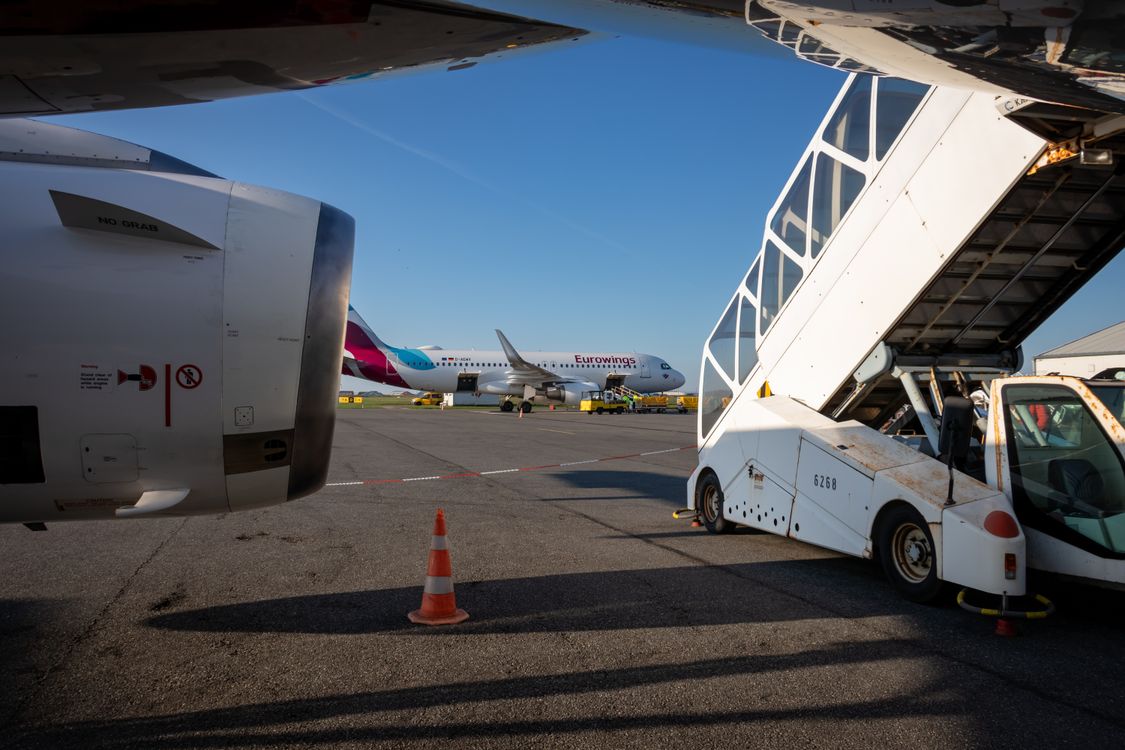
The most operationally immediate geopolitical risk for aviation is no longer potential. It is current. IATA estimated that 10 percent of all global international Revenue Passenger Kilometers passed through Middle East airports in 2025. Two escalation cycles in 2025 and one in early 2026 demonstrated how quickly that share can become a liability.
In June 2025, Israel and Iran exchanged missile strikes. Iran, Iraq, and Jordan closed their airspace. Ben Gurion Airport shut entirely. Emirates suspended flights to Tehran, Baghdad, and Basra. Etihad suspended Abu Dhabi–Tel Aviv through mid-July. Iran’s parliament voted to close the Strait of Hormuz. A ceasefire on June 24 paused hostilities, though EASA maintained its warning against operating in Iranian, Iraqi, Israeli, and Jordanian airspace and described the ceasefire as fragile.
The second cycle began February 28, 2026, when US and Israeli strikes on Iranian targets triggered missile and drone retaliation across the Gulf. Iran closed its airspace. Bahrain, Kuwait, Syria, and large sections of UAE and Qatari airspace closed simultaneously. Dubai Airport suspended operations on March 7 after a drone struck near Terminal 3. Qatar Airways began ferrying widebody aircraft to Teruel Airport in Spain for storage. Emirates operated at approximately 90 percent of pre-conflict levels; Etihad dropped to roughly 15 percent of normal Abu Dhabi capacity. With more than 20,000 passengers stranded across UAE airports, the UAE General Civil Aviation Authority announced on March 1 that the state would bear all accommodation and meal costs for affected travelers. Qatar Tourism issued a parallel circular to hotels covering approximately 8,000 stranded transit passengers. The UAE also issued more than 15,000 temporary entry visas allowing transit passengers to exit sterile airport zones and move into hotels while awaiting onward connections. Both were notable acts of destination crisis management, absorbing costs that would otherwise have fallen on individual travelers while protecting the long-term reputational standing of both countries as reliable transit hubs.
Dubai Airport suspended operations in March 2026 after a drone struck near Terminal 3. Qatar Airways began storing widebodies in Spain. The Gulf, which handled 10 percent of all global international RPKs in 2025, went from backbone to bottleneck within days.
The Strait of Hormuz carries approximately 20 percent of global oil supply. Any closure or credible closure threat pushes crude prices up, transmitting directly into jet fuel costs. IATA estimated jet fuel averaged USD 86 to 87 per barrel in 2025, already accounting for 25 to 26 percent of airline operating costs at baseline. That share climbs further under a price spike, and the surcharge lands hardest on routes serving price-sensitive traveler segments.
The Russia–Ukraine airspace closure, now in its fourth year, has permanently elevated the cost structure of flights between Western Europe and East Asia. Russian and Chinese carriers retain access to polar and Russian corridor routing that Western competitors cannot use, giving them a structural fare advantage that is not temporary. Beyond direct conflict, great power competition is reshaping connectivity in subtler ways. US-China air capacity remains well below 2019 levels, and the consumer sentiment effect of bilateral political tension operates even when no formal restriction exists.
Three intra-Asian conflict situations add a further layer of disruption that is often underweighted in planning conversations focused on the Middle East.
The Thailand-Cambodia border conflict, which escalated into sustained armed clashes from mid-2025, delivered the most direct tourism damage. The dispute, rooted in colonial-era boundary claims over ancient temple sites, produced more than 100 deaths and displaced over half a million civilians before a fragile ceasefire on December 27, 2025. Cambodia’s Asia-Pacific arrivals fell 20 percent year on year in 2025, with Thai visitors down over 50 percent. On the Thai side, resort islands in Trat Province that had reached 90 percent occupancy for peak season saw occupancy collapse to roughly 20 percent after insurers withdrew conflict zone coverage and governments issued Do Not Travel advisories. The Kasikorn Research Center estimated the conflict could reduce Thai GDP by 0.4 percent if extended into 2026. What this case illustrates is that a geographically small conflict can damage demand across a radius far wider than the fighting, because the operative mechanism is insurance withdrawal and advisory status, not physical access.
Myanmar remains in a different category: not a viable inbound destination at scale and not a meaningful outbound source market for the destinations covered in this analysis. The civil war initiated by the 2021 coup continues, compounded by a magnitude 7.7 earthquake near Sagaing in March 2025. The US, Australia, and Canada all carry Do Not Travel advisories for Myanmar. Its eventual stabilization represents latent bilateral opportunity, but that horizon is not visible from 2026.
The South China Sea presents a medium-term confidence risk rather than an immediate operational disruption. Several overlapping maritime boundary claims in the South China Sea, including China’s nine-dash line, have produced recurring incidents throughout 2025 and into 2026. In September 2025, China declared a nature reserve at Scarborough Shoal; both the US and Philippines stated the declaration had no basis in international law. In October 2025, a Philippine government vessel was damaged in an incident near Thitu Island. Over 500 US-Philippines joint military exercises are planned for 2026. For tourism, the immediate risk to flight operations is low. The longer-term risk is to traveler confidence in the Philippines and Vietnam as destinations if incidents escalate, and to the positioning of both countries in source markets where media coverage of maritime disputes shapes consumer sentiment before any destination marketing reaches the traveler.
II. The Climate Layer: From Reputational Risk to Operational Reality

Climate change entered the tourism conversation primarily as a reputational and regulatory concern: carbon footprint, sustainability certifications, traveler sentiment surveys. That framing was never wrong, but it was incomplete. What is now apparent is that climate volatility is also a direct operational risk, and the two dimensions require different responses.
The 2023 wildfire season in Greece, Rhodes, and Maui, the 2024 flooding in Valencia and Dubai, and repeated extreme heat closures at Mediterranean and Middle Eastern sites demonstrated that climate events can disable tourism infrastructure with the same speed and completeness as a geopolitical shock. Travelers cancel. Insurance claims spike. Destination reputations absorb damage that takes years to recover.
For aviation specifically, climate is already a cost pressure through two channels. The first is physical: extreme heat events reduce aircraft payload capacity on certain routes, because air density affects lift, and several Gulf and South Asian airports regularly exceed temperature thresholds that require operational adjustments. The second is regulatory: the European Union’s Emissions Trading System has extended to aviation, adding a carbon cost to flights within and increasingly beyond the EU. These are not distant policy scenarios; they are current operating expenses that will increase.
From a demand perspective, traveler attitudes toward sustainability are moving, but not uniformly. A meaningful minority of travelers in high-income markets, particularly younger cohorts in Western Europe, Scandinavia, and parts of North America, factor carbon footprint into travel decisions. The majority do not, or do so inconsistently. The commercial pressure to act on sustainability is therefore not yet symmetric with the reputational pressure to claim it, which creates an incentive for overstating progress.
The more durable commercial argument for genuine sustainability investment is destination-level resilience: coastal destinations that have let infrastructure encroach on natural buffers are more vulnerable to storm damage; ski resorts that have not planned for reduced snowfall face structural viability questions regardless of whether they market themselves as sustainable. Climate adaptation and climate communication are different activities, and the industry’s tendency to conflate them is a planning problem as much as a communications one.
III. The AI and Digital Layer: Speed, Fragility, and the Forecasting Gap

Artificial intelligence is reshaping travel in ways that are simultaneously well-documented and poorly understood at the planning level. AI-powered search and booking tools are changing how travelers discover destinations, compare options, and make decisions. Large language models are now a meaningful channel through which travelers form first impressions of destinations they have not visited. Recommendation algorithms on booking platforms are increasingly opaque intermediaries between a destination’s marketing investment and the traveler’s decision.
AI-driven booking behavior is faster and more reactive than the behavior it replaced. A traveler using an AI search interface can identify, price, and book an alternative destination within minutes of seeing a news headline about disruption at their original choice. That speed of substitution shortens the window between a triggering event and a measurable demand shift, which means crisis communication needs to operate faster than the planning cycles most destinations currently run.
The same technology creates asymmetric information conditions. A destination that actively manages its presence in AI training data, review aggregators, and structured data sources controls more of its own narrative than one that does not. This is not a social media strategy point. It is a distribution infrastructure point. How a destination appears in an AI-generated travel recommendation depends on the quality, recency, and structure of the data available about it, not primarily on the quality of its marketing copy.
AI also changes the economics of travel agent relationships. As AI trip-planning tools become more capable, the role of the traditional travel agent shifts from information intermediary to experience curator and complexity manager. That shift is uneven across source markets: in markets with high digital penetration and high traveler independence, like Singapore, South Korea, and Australia, it is already advanced. In markets where the agent relationship remains central to high-value trip planning, including several Gulf states and parts of South Asia, it will move more slowly.
AI shortens the window between a disruption event and a measurable shift in booking demand. Crisis communication that runs on a 72-hour planning cycle is already behind.
IV. What COVID Actually Taught the Industry
The COVID-19 pandemic produced the sharpest demand collapse in the history of commercial aviation. UN Tourism recorded a 74 percent fall in international tourist arrivals in 2020. Recovery was slower than virtually every industry forecast predicted, and deeply uneven: some markets approached 2019 volumes by 2023; others remained materially below pre-pandemic levels into 2025.
What held
Flexibility converts from amenity to expectation under stress. Travelers who received genuine, frictionless cancellation during COVID formed lasting preferences. Those that enforced cancellation penalties, even legally defensible ones, took reputational damage that persisted into the recovery period. Many operators reverted to pre-pandemic structures once demand recovered. That reversion may look rational in a strong market and create real exposure in the next disruption.
Direct booking relationships matter more under stress than under normal conditions. The COVID period accelerated loyalty program enrollment and direct-channel booking across most major carriers and hotel groups. That structural shift has held.
Government coordination determines recovery speed. Singapore, the UAE, and Thailand moved faster than markets where government and tourism operated at arm’s length, not because they were less affected, but because they had pre-established channels that allowed rapid alignment.
What did not hold
Source market diversification was stated as a lesson and then largely abandoned as recovery demand concentrated in familiar pre-pandemic source markets. The diversification was deferred to a future period of stability that has not arrived.
Scenario planning was updated for epidemiological triggers and not much else. Very few crisis preparedness frameworks address airspace closure, oil price shock, or bilateral political rupture in the structured way that pandemic scenarios now appear in planning documents. The next disruption is not going to resemble the last one.
Travel insurance penetration remained low. Despite COVID demonstrating the full cost of uninsured disruption, penetration in most markets remains below 40 percent. Insured travelers rebook faster. The commercial interest of destinations and operators in higher insurance coverage is direct, not incidental.
V. What Resilience Actually Requires
Resilience in this context does not mean immunity to disruption. It means reducing the time between disruption and recovery, maintaining trust with travelers and trade partners through uncertainty, and making structural choices that do not amplify single-point failures. This is, in concrete operational terms, what Balanced Tourism looks like: not a statement of values, but a set of portfolio decisions made before disruption arrives.
One observation from recent crisis cycles that deserves more attention: post-crisis recovery is not even across a competitive landscape. Destinations that have spent years building institutional credibility, reliable infrastructure, and clear global positioning tend to recover faster and capture demand redirected away from slower-recovering competitors. Trust, built slowly through consistent execution, becomes a competitive asset precisely when uncertainty is high and travelers are narrowing their choices.
Build disruption scenarios into forecasting on a standing basis
Not as an annual exercise but as a quarterly discipline. Any destination or operator with meaningful exposure to geopolitical volatility, climate-sensitive seasons, or source markets experiencing political instability should be running at minimum three scenarios: current conditions continuing, a single major disruption, and a compound stress event.
Use AI tools for early detection, not just marketing efficiency
AI-powered monitoring tools can track booking velocity, cancellation rates, and social media sentiment in near real-time. That shortens the time between disruption and awareness, which is where most of the recovery lag lives. Destinations that have invested in this capability are measurably faster to respond than those that rely on monthly reporting cycles.
Separate sustainability communication from adaptation investment
The destinations with the strongest long-term positions in a climate-affected world are those actually adapting their infrastructure, water systems, and operating models, regardless of how much they communicate about it. The certification and the investment are not the same thing.
Pre-negotiate crisis communication protocols
The contacts, communication hierarchies, and messaging frameworks that govern a destination’s response to disruption should exist before the disruption. Destinations that went silent during COVID lost trade partner relationships that took years to rebuild. Silence reads as either incompetence or indifference; trade partners respond to both the same way.
Invest in source market diversification during strong periods
Diversification funded at the peak of demand from a primary source market is expensive and difficult. Diversification deferred until that source market experiences a problem is reactive and slow. This is what distinguishes Balanced Tourism from promotional tourism: one is a portfolio decision, the other is a volume chase.
When a region-wide disruption hits, recovery will not be uniform. Destinations with broader source market portfolios, stronger government-industry coordination, and more integrated tourism systems will recover faster. Their competitive advantage over more concentrated destinations widens precisely during the period of disruption, not after it.
Maintain government-level tourism relationships before they are needed
Several of the most consequential decisions affecting tourism, including airspace negotiation, bilateral visa policy, airline traffic rights, and carbon pricing exemptions, are made at the government level. The calls that matter in a crisis are made between people who already know each other.
VI. The Asian Outbound Window

Asia-Pacific outbound markets are an instructive lens for these pressures precisely because they represent the full range of exposure types: from high-spending, resilient markets with strong passport access, to price-sensitive, connectivity-dependent segments where a fuel surcharge or advisory issuance converts quickly into demand loss.
South Asian markets, including India, Pakistan, and Bangladesh, sit directly under the Iran-corridor routing risk and contain large price-sensitive segments for whom fuel surcharge increases translate quickly into booking cancellations. India’s outbound market is the fastest-growing major source market in the world by volume, but the composition of that growth, across income tiers with very different price sensitivity, matters enormously for how specific disruptions affect specific segments.
Gulf markets, including Oman, Qatar, and Kuwait, face proximity to the primary conflict zone and contain significant expatriate populations whose travel decisions are influenced by conditions in their home countries. A crisis affecting the Philippines or Pakistan does not only affect Filipino or Pakistani travelers: it affects the large communities from those countries living in Gulf states, whose family visit travel and remittance-linked leisure trips constitute a meaningful share of Gulf outbound volume.
East Asian markets, from Hong Kong and Singapore to South Korea and Japan, are generally better insulated by passport strength, carrier diversity, and high average trip budgets. But US-China bilateral tension affects Hong Kong’s positioning between the world’s two largest economies in ways that have no clear resolution on any visible horizon.
Southeast and Central Asian markets sit between these poles. Vietnam’s outbound market is among the fastest-growing in the region but contains a high proportion of first-time international travelers more susceptible to deterrence by perceived risk. The Philippines operates under dual pressure: geopolitical disruption in Gulf destination states affects its outbound volume directly, and South China Sea tensions create a positioning risk for Chinese travelers to the Philippines. Thailand’s inbound performance showed that a border conflict covering less than five percent of its landmass could collapse occupancy at resort islands far from any fighting, through insurance withdrawal and government advisories alone.
None of this is specific to Asia. The exposure types appear in different proportions across every major outbound region. Asia simply makes them visible with particular clarity because the scale is large, the diversity is high, and the pace of change is fast.
Planning for Balance Before the Next Disruption

I have worked in tourism long enough to have advised destinations through the September 11 aftermath, the 2003 SARS outbreak, the 2008 financial crisis, the Arab Spring, and COVID. Each time, the industry’s initial response was to treat the disruption as temporary and plan for a return to prior conditions. Each time, the prior conditions did not fully return. The recovery was real, but it produced a different market.
The conditions described in this piece are not temporary. Geopolitical conflict at the scale currently active in the Middle East, along the Thai-Cambodian border, and in the South China Sea does not resolve on a tourism planning timeline. UN Tourism projected 3 to 4 percent growth in international arrivals for 2026, conditioned explicitly on geopolitical conflicts not escalating. That forecast was published in January 2026. Within six weeks, the February escalation had closed Gulf airspace, grounded carriers, and suspended Dubai Airport operations.
Balanced Tourism is not a slogan. It is a planning methodology. It asks whether a destination’s demand base is distributed across enough source markets to absorb a single-market shock. Whether routing dependencies are spread across enough carriers and corridors to survive a regional closure. Whether development investment is calibrated to the physical risks of the next decade rather than the financial returns of the last one. Whether the relationships between government, industry, and international partners are maintained well enough to accelerate recovery when the next disruption arrives.
Post-crisis recovery is not equal across a competitive landscape. Destinations with deeper infrastructure, stronger institutional credibility, and more integrated tourism systems recover faster and capture demand redirected away from slower-recovering competitors. The gap between a balanced system and a concentrated one widens precisely during disruption. Building balance during strong periods is when it is possible.
The gap between destinations that recover fast and those that recover slowly is usually built years before the crisis that tests it.
The traveler who cancels because fares doubled, the family that postpones because the route no longer operates, the operator that loses a season because its key source market is under diplomatic strain: these are not statistics. They are the mechanism through which an unbalanced tourism system converts geopolitical risk into revenue loss. The gap can be narrowed. That is what the planning work is for.
About the Author
Dr. Jens Thraenhart is CEO of Chameleon Strategies (UN Tourism Affiliate Member), Founder of Saudi Outbound, and an Advisor to the Saudi Tourism Authority. His prior roles include CEO of Barbados Tourism Marketing Inc., Executive Director/CEO of the Mekong Tourism Coordinating Office, Executive Director of Marketing Strategy at Destination Canada, and Executive Director of Digital Strategy at Fairmont Hotels and Resorts. He co-founded Dragon Trail China, among the earliest firms focused on digital marketing for Chinese outbound tourism. He has advised tourism authorities, airlines, and destination marketing organizations across Asia, the Middle East, the Caribbean, and North America.
Sources
IATA. (December 9, 2025). Airline profitability stabilizes with 3.9% net margin expected in 2026.
IATA. (June 2, 2025). Airline profitability to strengthen slightly in 2025.
UN Tourism. (January 20, 2026). International tourist arrivals up 4% in 2025.
EASA. (June 30, 2025). Conflict zone information bulletin: Middle East airspace.
Aviation Week Network. (March 2026). How Middle East networks are being disrupted by the Iran war.
CNN. (March 2, 2026). The hole in the sky: How Middle East airspace closures are reshaping global aviation.
Al Jazeera. (June 24, 2025). Are airlines stopping flights to Middle East amid soaring tensions?
Britannica. (2026). Thailand-Cambodia Conflict (2025).
CNBC. (February 5, 2026). Cambodia’s border tensions and scam hub stigma harms tourism.
Khaosod English. (December 10, 2025). Thai-Cambodian border clashes threaten tourism during peak season.
East Asia Forum. (February 27, 2026). Drifting through dispute in the South China Sea.
Foreign Policy. (February 4, 2026). Philippines pushes South China Sea Code of Conduct talks.
U.S. EIA. (2024). World oil transit chokepoints.
UN Tourism. (2021). Impact assessment of the COVID-19 outbreak on international tourism.
European Commission. (2024). EU Emissions Trading System: aviation sector.
Estimates cited without a named publication represent industry approximations qualified as such in the text. Readers seeking precise cost data should consult carrier-specific financial disclosures and IATA fuel cost indices.
 BALANCED TOURISM
Leave a comment